



Can high-concentration L-lysine immune liquid treat feline herpesvirus?
Release Time : 2026-07-01
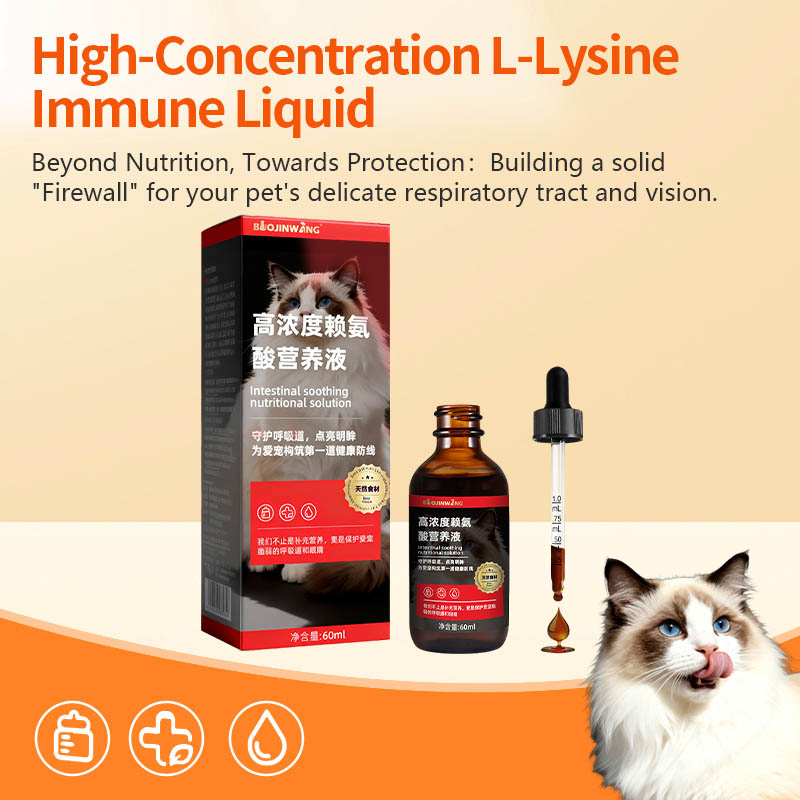
The use of high-concentration L-lysine immune liquid for managing feline herpesvirus has been a subject of extensive debate and evolving scientific understanding within the veterinary community. Historically, L-lysine was widely recommended as a primary intervention for feline upper respiratory tract infections. The theoretical foundation of this treatment was based on the concept of competitive antagonism. It was believed that supplementing high concentrations of L-lysine would competitively inhibit the absorption of arginine, an amino acid essential for the replication of the herpesvirus. By reducing the availability of arginine, the viral replication process would theoretically be suppressed, thereby alleviating clinical signs such as sneezing, runny nose, and conjunctivitis.
However, modern veterinary science and extensive clinical research have fundamentally challenged this long-held belief. Comprehensive systematic reviews and controlled studies have demonstrated that L-lysine supplementation does not effectively prevent or treat feline herpesvirus infections. Experimental evidence has shown that administering high concentrations of L-lysine to cats does not significantly alter plasma arginine levels. Unlike other species, cats do not exhibit the expected competitive antagonism between these two amino acids. Consequently, the viral replication cycle remains largely unaffected by L-lysine supplementation, and clinical symptoms such as sneezing and nasal discharge are not reliably reduced.
Furthermore, the biological nature of feline herpesvirus presents a significant barrier to any nutritional intervention. Once a cat is infected, the virus establishes a lifelong latent state within the trigeminal ganglia. During periods of physiological or environmental stress, the virus can reactivate and cause clinical symptoms. L-lysine has no mechanism to eradicate the latent virus or prevent its reactivation. Therefore, while high-concentration L-lysine immune liquid may be marketed as an immune support supplement, it lacks the specific antiviral properties required to manage this persistent infection.
Beyond the lack of efficacy, there are potential safety concerns associated with the use of high-concentration L-lysine products. Arginine is an essential amino acid for cats, playing a critical role in the urea cycle and ammonia detoxification. Attempting to manipulate amino acid pathways through high-dose supplementation can disrupt normal metabolic processes. Some studies and veterinary observations have indicated that excessive L-lysine intake can lead to adverse effects, including gastrointestinal distress, decreased appetite, and in severe cases, weight loss or ammonia toxicity. Because cats are obligate carnivores, their metabolic requirements are highly specialized, and interfering with essential amino acid balances is generally discouraged.
Given the current scientific consensus, the management of feline herpesvirus should focus on evidence-based veterinary care rather than unproven nutritional supplements. Effective treatment strategies involve addressing secondary bacterial infections with appropriate antibiotics, providing supportive care such as humidification and nutritional support, and utilizing targeted antiviral medications like famciclovir when necessary. Minimizing environmental stressors is also paramount in preventing viral reactivation. While high-concentration L-lysine immune liquid may still be found in many pet care markets, veterinary professionals increasingly advise against its use as a primary treatment for feline herpesvirus. Pet owners are encouraged to consult with licensed veterinarians to develop safe, effective, and scientifically validated treatment plans for their feline companions. The shift away from L-lysine represents a positive evolution in veterinary medicine, emphasizing the importance of rigorous scientific evidence over historical precedent in ensuring the best possible health outcomes for pets.
However, modern veterinary science and extensive clinical research have fundamentally challenged this long-held belief. Comprehensive systematic reviews and controlled studies have demonstrated that L-lysine supplementation does not effectively prevent or treat feline herpesvirus infections. Experimental evidence has shown that administering high concentrations of L-lysine to cats does not significantly alter plasma arginine levels. Unlike other species, cats do not exhibit the expected competitive antagonism between these two amino acids. Consequently, the viral replication cycle remains largely unaffected by L-lysine supplementation, and clinical symptoms such as sneezing and nasal discharge are not reliably reduced.
Furthermore, the biological nature of feline herpesvirus presents a significant barrier to any nutritional intervention. Once a cat is infected, the virus establishes a lifelong latent state within the trigeminal ganglia. During periods of physiological or environmental stress, the virus can reactivate and cause clinical symptoms. L-lysine has no mechanism to eradicate the latent virus or prevent its reactivation. Therefore, while high-concentration L-lysine immune liquid may be marketed as an immune support supplement, it lacks the specific antiviral properties required to manage this persistent infection.
Beyond the lack of efficacy, there are potential safety concerns associated with the use of high-concentration L-lysine products. Arginine is an essential amino acid for cats, playing a critical role in the urea cycle and ammonia detoxification. Attempting to manipulate amino acid pathways through high-dose supplementation can disrupt normal metabolic processes. Some studies and veterinary observations have indicated that excessive L-lysine intake can lead to adverse effects, including gastrointestinal distress, decreased appetite, and in severe cases, weight loss or ammonia toxicity. Because cats are obligate carnivores, their metabolic requirements are highly specialized, and interfering with essential amino acid balances is generally discouraged.
Given the current scientific consensus, the management of feline herpesvirus should focus on evidence-based veterinary care rather than unproven nutritional supplements. Effective treatment strategies involve addressing secondary bacterial infections with appropriate antibiotics, providing supportive care such as humidification and nutritional support, and utilizing targeted antiviral medications like famciclovir when necessary. Minimizing environmental stressors is also paramount in preventing viral reactivation. While high-concentration L-lysine immune liquid may still be found in many pet care markets, veterinary professionals increasingly advise against its use as a primary treatment for feline herpesvirus. Pet owners are encouraged to consult with licensed veterinarians to develop safe, effective, and scientifically validated treatment plans for their feline companions. The shift away from L-lysine represents a positive evolution in veterinary medicine, emphasizing the importance of rigorous scientific evidence over historical precedent in ensuring the best possible health outcomes for pets.